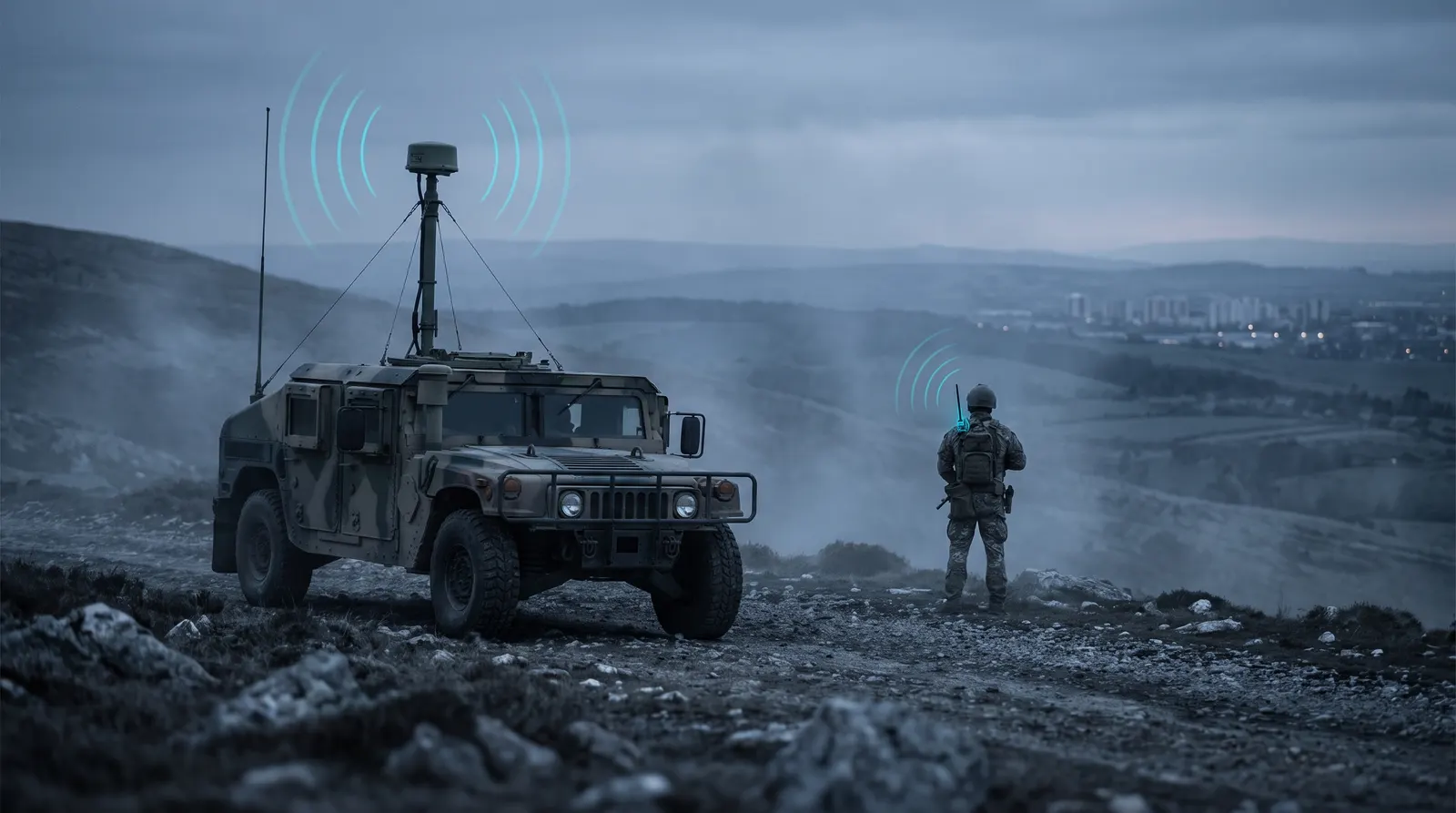
A GNSS antenna on a command vehicle or clipped to a soldier’s harness works nothing like the one on a delivery van, even when the receiver is identical. The commercial ground antenna optimises for accuracy in a cooperative environment with a live data connection. The tactical one has to hold a usable, trustworthy position in a sky that is both obstructed and contested — and then, when the cellular and data networks are gone or denied, it still has to get a position report out and orders back in. That second job is where ground defense GNSS diverges most sharply from everything else, and it is where one satellite system does something the others can’t.
This is the ground member of the aerospace-and-defense antenna family, alongside the launch-vehicle antenna and the military and ISR drone antenna. It is not the same problem as the civilian vehicle antennas built for ADAS and fleet accuracy — the platform looks similar, the mission does not. This guide covers the obstructed-and-contested ground environment, the two-way messaging that keeps a platform connected when the network is down, and how the antenna changes as you move from a vehicle to a soldier on foot.
The obstructed, contested sky
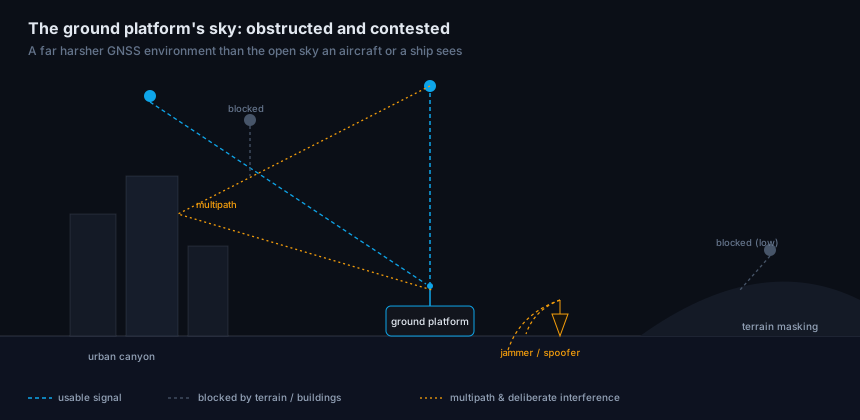
Start with the environment, because it is the harshest a GNSS antenna routinely works in. An aircraft or a ship sees open sky; a ground platform sees a sky with most of it taken away.
It is obstructed. Terrain masks the low-elevation satellites, urban canyons cut the sky to a strip, foliage attenuates what is left, and the platform’s own body shadows a whole hemisphere. Accuracy worsens near buildings, terrain, and trees because fewer satellites are visible and the geometry degrades, and the hard flat surfaces that remain throw multipath — reflected copies of the signal that confuse the receiver. The antenna’s answers are all about seeing more of a diminished sky: broad multi-constellation reception, which adds real value to availability in exactly these obstructed environments; a clean low-elevation pattern to use the few satellites near the horizon; and multipath rejection through pattern control and polarization purity.
It is also contested. On top of the natural obstruction sits a deliberate one. GNSS jamming and spoofing have seen a notable increase since 2022, and ground forces operate squarely inside that electronic-warfare environment. The antenna-level defences — anti-jam filtering, a high-power limiter to survive strong nearby emitters, and multi-element CRPA null-steering where the platform can carry it — are the same physics worked through in the anti-jamming guide and the ISR-drone article; the point here is that a ground platform needs them and has to fit them into a tighter package. The difference between jamming and spoofing, and why spoofing is the more dangerous of the two, carries over unchanged from the air.
When the network is gone: two-way messaging
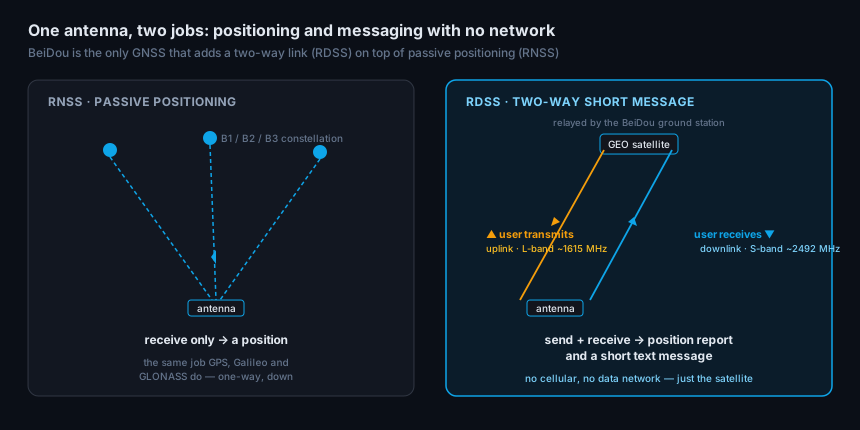
Here is what makes the ground problem genuinely different. A drone or a survey vessel that loses GNSS still usually has a radio link home. A dismounted patrol or a vehicle operating past the edge of the network may have neither cellular nor data — and a position you cannot report is only half useful. The platform needs to say where it is and receive what to do next, over the same satellites, with no cellular or data network of its own.
BeiDou is the only GNSS that builds this in. Alongside the passive, GPS-like positioning service — RNSS, which just receives the B1/B2/B3 signals and computes a fix — BeiDou adds RDSS, a two-way short-message service. The terminal transmits a report up to a geostationary satellite on L-band (around 1615 MHz), the BeiDou ground control station relays it, and the reply comes back down to the terminal on S-band (around 2492 MHz). No cellular, no data network — the satellite itself carries a position report and a short text message (regionally, up to around 120 Chinese characters). The distinction between RDSS and RNSS is the distinction between an active, transmitting link and a passive, receive-only fix, and it is why a BeiDou-region ground platform can stay connected where a GPS-only one goes silent.
RDSS is regional — it covers China and surrounding areas — so it is not a universal answer. But for operators inside that footprint, the ability to fuse positioning and beyond-network messaging into one antenna is a capability GPS, Galileo, and GLONASS simply do not offer.
One antenna, two jobs — and why that’s hard
Doing both at once is not free. An antenna that receives weak RNSS signals from space and transmits a watts-level RDSS burst has to keep the transmit energy from swamping its own receive path. That is why these are purpose-built parts: they combine an active receive chain for B1/B2/B3 with a transmit path for the L-band uplink and a receive path for the S-band downlink, and they need the filtering and isolation to keep the strong transmit signal from desensitising the quiet positioning channels. On military-grade units the transmit side runs to real power — a 5 W RDSS transmitter with a high-power limiter to survive it — and the whole assembly is built to a defence EMC discipline (Chinese military GJB standards: GJB 9001C for the quality system, GJB 1389 for system-level electromagnetic compatibility). None of that appears on a commercial positioning antenna, because a commercial antenna never transmits.
SWaP across the ground platform
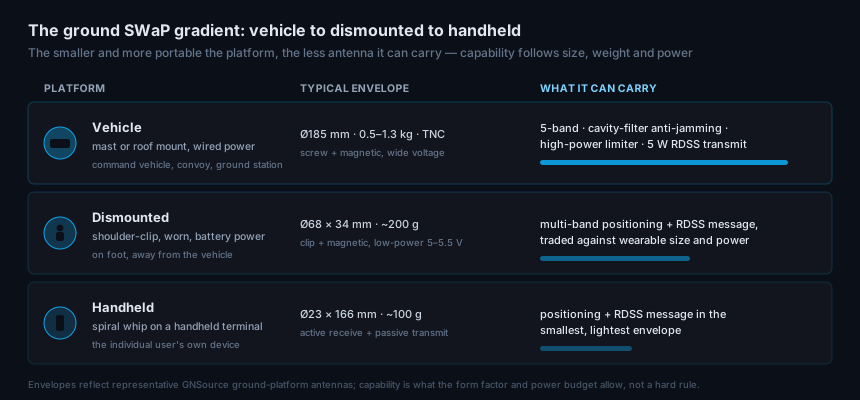
Unlike aircraft, which are relatively uniform, ground platforms span an enormous range of size, weight, and power, and the antenna has to follow it down. A command vehicle carries a mast- or roof-mounted antenna with room for a five-band element, cavity-filter anti-jamming, and a 5 W transmitter on wired power. A dismounted operator wears a shoulder-clip antenna that trades size and transmit power for something you can carry all day on a battery. And an individual’s handheld terminal takes the smallest, lightest whip of all. Capability follows the envelope — for a soldier on foot, SWaP is paramount, exactly as it is on a small drone, and the same SWaP-C trade-offs apply: you fit the antenna the platform can carry, then extract the most from it.
Where the antenna fits
The requirements land in a short list, and together they describe a part that is neither a survey antenna nor a car antenna:
- Multi-constellation, multi-band reception to see enough of an obstructed, masked sky and to hold geometry when terrain and buildings take most of it away.
- Anti-jam and anti-spoof capability sized to the platform — filtering and a high-power limiter at minimum, CRPA null-steering where the vehicle can carry it — because the ground is an electronic-warfare environment.
- RDSS transmit/receive integrated with RNSS reception, with the isolation and filtering to run a watts-level L-band transmit path beside quiet positioning channels — one antenna that both positions and messages.
- A form factor matched to the platform, from a mast-mounted vehicle antenna down to a wearable shoulder-clip or handheld whip.
- Defence-grade ruggedization and EMC — wide temperature and voltage range, shock and vibration endurance, and qualification to standards like GJB 1389, because the field is not a lab.
This is squarely defence hardware. It sits across the defense & military line, the vehicle-mounted line, and the BDS short-message line — the integrated RNSS-plus-RDSS antennas, from mast-mounted vehicle units to handheld terminals, that let a ground platform position and stay connected in contested, network-denied conditions. Where the threat calls for it, the anti-jamming CRPA arrays add the null-steering layer on top.
Frequently asked questions
How is a tactical ground GNSS antenna different from a car or fleet antenna? The mission is different, so the antenna is. A fleet antenna optimises accuracy in a cooperative sky with a live data link. A tactical ground antenna has to work in a sky that is both obstructed (terrain, urban canyon, foliage, the platform’s own body) and contested (jamming, spoofing), and — the big one — it typically integrates BeiDou RDSS so the platform can report position and exchange messages by satellite when the cellular network is gone. It is also built to a defence ruggedization and EMC standard a commercial antenna is not.
What is BeiDou RDSS and why does it matter on the ground? RDSS (Radio Determination Satellite Service) is BeiDou’s two-way short-message service. Unlike the passive, receive-only positioning that GPS, Galileo, GLONASS, and BeiDou’s own RNSS provide, RDSS lets a terminal transmit up to a satellite and receive back down — carrying a position report and a short text message with no terrestrial network. On the ground, where the data network may be absent or denied, that turns the antenna into both a positioning and a communications device. It is a regional service (China and surrounding areas).
Can one antenna do both positioning and messaging? Yes, and the integrated units are exactly that — but it takes design work. The antenna receives weak RNSS positioning signals from space while also transmitting a watts-level RDSS burst on L-band and receiving the S-band reply. The engineering challenge is isolation and filtering: keeping the strong transmit signal from desensitising the quiet receive channels. That is why these are purpose-built parts rather than a receive antenna with a transmitter bolted on.
How does the antenna change from a vehicle to a dismounted soldier? It scales down with the platform’s size, weight, and power. A vehicle carries a large mast- or roof-mounted antenna with a five-band element, cavity-filter anti-jamming, and a high-power transmitter on wired power. A dismounted operator wears a much smaller shoulder-clip antenna on battery power, and a handheld terminal takes the smallest whip of all — each trading capability for portability, the same SWaP logic that governs a small UAV.
Does GNSS jamming really affect ground forces? Yes. Aviation authorities have logged a notable rise in GNSS jamming and spoofing since 2022, and ground forces operate inside that same electronic-warfare environment. The antenna is the first line of defence — filtering, a high-power limiter, and multi-element CRPA null-steering where the platform can carry it — after which assured PNT is layered across the antenna, the receiver, and inertial navigation, exactly as it is on an airborne platform.
Written by GNSource Engineering. GNSource manufactures anti-jam, RDSS-capable GNSS antennas for defense, vehicle, and dismounted platforms. Talk to our engineers about an antenna that positions and messages in contested, network-denied conditions, or explore the defense & military line.