
Defense & Aerospace
Defense & Military Antennas
Military-grade antenna solutions spanning VHF through W-band. Horn antennas, phased arrays, waveguide slot arrays, ultra-wideband spirals, missile-borne microstrips, and custom radomes — engineered and certified to GJB 9001C military quality standards for airborne, missile-borne, ship-borne, and ground platforms.
Application Overview
Purpose-Built Antennas for Contested Environments
Defense-grade antennas operate under constraints no commercial system faces: airborne vibration at MIL-STD profiles, missile-launch accelerations exceeding 31,000 g axial, ship-deck salt spray, ground vehicle dust, and electromagnetic environments saturated with intentional interference and nearby high-power emitters. They must function through temperature excursions from -55 °C to +85 °C, survive overpressure shockwaves, and maintain signal integrity across decades of service life. Every design decision — from radome material to feed structure geometry — is a deliberate trade-off between electrical performance, mechanical survivability, and platform integration.
GNSource defense antennas cover the full operational spectrum. UHF and L-band omnidirectional airborne antennas for reliable air-to-ground communication links. L-band high-power horn antennas for ground-based tracking and command systems. X-band monopulse slot arrays and Ka-band waveguide arrays for fire-control radar and IFF. Ka-band and Ku-band phased arrays for active electronically scanned radar and SATCOM-on-the-move. W-band millimeter-wave arrays for short-range high-resolution sensing. And a complete radome portfolio — Ka composite, ultra-wideband, L/P/X FRP and PE variants — sealed to meet their host antenna's performance without signal degradation.
Each platform class has its own priorities. Missile-borne antennas prioritize compact size, screw-mount integration, and the ability to survive launch loads. Airborne antennas focus on light weight and corrosion resistance. Shipborne systems demand salt-spray durability and power handling. Ground-based tracking radars require sustained high-duty-cycle performance on vehicle-mounted pedestals. GNSource engineering supports customization of frequency, size, interface, and mechanical structure to match specific platform requirements — contact us directly with your mission profile.
Key Specifications to Consider
Frequency Band
Mission dictates band; match radar/comms requirements carefully.
Power Handling
Ground systems need kW-class; airborne tight power budgets.
Scan Performance
Phased arrays enable rapid electronic steering vs. mechanical.
Environmental Rating
MIL-STD vibration, shock, temperature, salt spray.
Interface & Connector
SMA, TNC, N-type, L29, BJ320 waveguide for Ka band.
Capability Coverage
Full-Spectrum Defense Antenna Portfolio
Defense products are configured per platform and mission. Each capability area below is backed by production-ready designs and extensive customization support — contact our engineering team to discuss your specific frequency, power, and mechanical requirements.
VHF / UHF / P-Band
Sub-GHz — ground & airborne comms
Omnidirectional VHF and UHF antennas for ground and shipborne communications. UHF ceramic conformal variants survive extreme temperatures. P-band dual-polarized arrays for long-range radar and comms.
L-Band Systems
1–2 GHz — airborne, satellite, high-power
Airborne omnidirectional and satellite-borne L-band antennas. Conformal low-profile designs for aircraft integration. High-power horn antennas for ground-based tracking and command links.
X-Band Radar
8–12 GHz — surveillance, fire control
X-band horn antennas, monopulse slot arrays for missile fire-control radar, and active electronically scanned arrays (AESA) combining electronic beam steering with mechanical scanning for ground and naval surveillance.
Ka / Ku-Band
12–40 GHz — satcom, missile, IFF
Ku-band ring-focal reflector and active phased arrays for SATCOM terminals. Ka-band waveguide slot arrays for IFF, microstrip arrays and EBG-structured transmitting antennas for missile-borne Tx/Rx.
W-Band & Ultra-Wideband
75+ GHz + 0.35–18 GHz wideband
W-band dual-polarized waveguide arrays for millimeter-wave sensing. Ultra-wideband planar spirals, log-periodics, and dual-polarized probes covering 0.35–18 GHz for electronic warfare, SIGINT, and measurement.
Radomes & Platform Integration
Custom mechanical integration
FRP, PE, and composite radomes for Ka, Ku, L/P/X bands. Ultra-wideband vehicle-mounted radomes. Customization of frequency, size, connector, and conformal mechanical structure to match your platform.
FAQ
Defense & Military FAQs
Frequently asked questions on frequency coverage, certifications, customization programs, export control, and qualification testing.
What frequency bands do your defense antennas cover?
Full spectrum from VHF through W-band: L-band airborne, satellite-borne, conformal, and high-power horn; S/C/X-band horn and monopulse slot arrays; Ku and Ka-band active phased arrays for SATCOM and IFF; W-band millimeter-wave dual-polarized arrays for short-range sensing; and ultra-wideband spiral, log-periodic, and dual-polarized probes covering 0.35–18 GHz for electronic warfare and SIGINT.
Are defense products GJB certified?
GNSource holds GJB 9001C-2017 military quality management system certification, covering design, manufacturing, and testing processes under the Chinese defense quality regime. Specific product-level MIL-STD equivalents or additional environmental qualification depend on configuration and customer requirements — discuss your qualification needs during inquiry.
How does customization work for defense projects?
Our engineering team supports customization of frequency tuning, aperture size, mechanical envelope (conformal for missile fairings, flush-mount for ground platforms), connector selection, and color / RAL matching. Fully custom antenna-design programs follow a scoping phase, a design phase, and a qualification phase — contact us with your mission profile and platform constraints for a program plan and schedule.
How does GNSource handle export control for defense-grade products?
Defense-grade antennas are subject to Chinese export-control regulations and may also fall under U.S. EAR / ITAR or EU dual-use regimes depending on configuration and destination country. Every inquiry is screened against end-user, end-use, and denied-party lists. We decline orders that cannot be lawfully fulfilled under applicable law.
Can you provide MIL-STD environmental test data?
Environmental testing — vibration, shock, salt spray, temperature cycling, ESD — is performed per GJB standards and, where applicable, MIL-STD equivalents. Test reports are available under mutual NDA for qualified customers after initial inquiry review and export-control clearance.
Do you supply custom radomes?
Yes. Ka-band composite radome, ultra-wideband vehicle-mounted radome, and L/P/X-band FRP and PE radomes are cataloged. Custom materials, aperture dimensions, and electrical performance (transmittance, overload) are supported for specific platform mechanical envelopes — send your platform drawing and performance targets for a quotation.
Get a Quote
Request a quote for Defense & Military antennas
Tell us about your project — we'll respond within 24 hours with pricing, lead time, and technical recommendations tailored to your application.
Related Solutions
You might also need
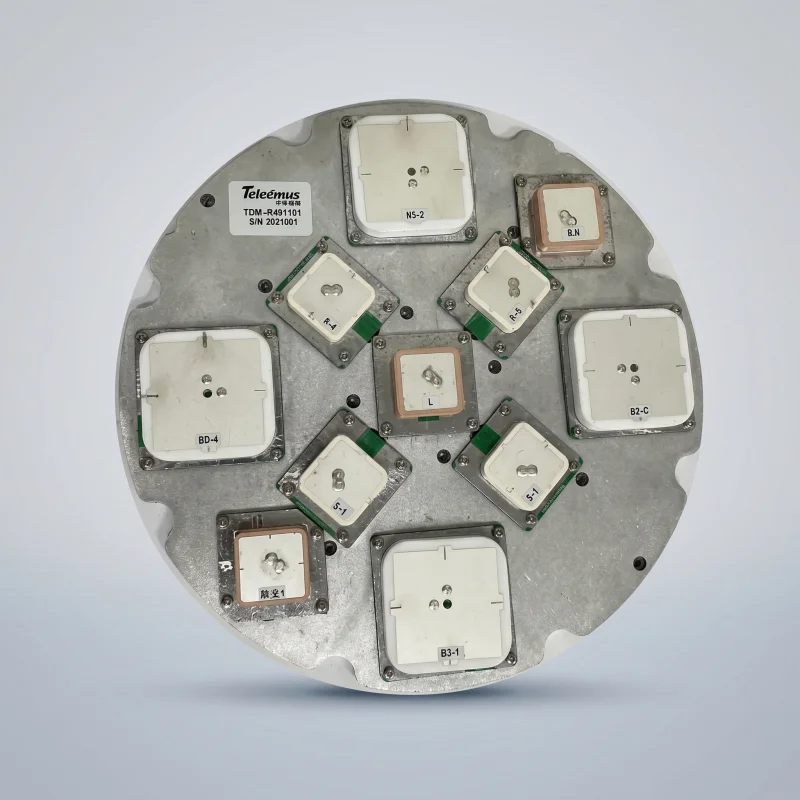
Anti-Jamming CRPA
Controlled Reception Pattern Arrays from 4 to 32 elements for contested RF environments and anti-spoofing.
View Category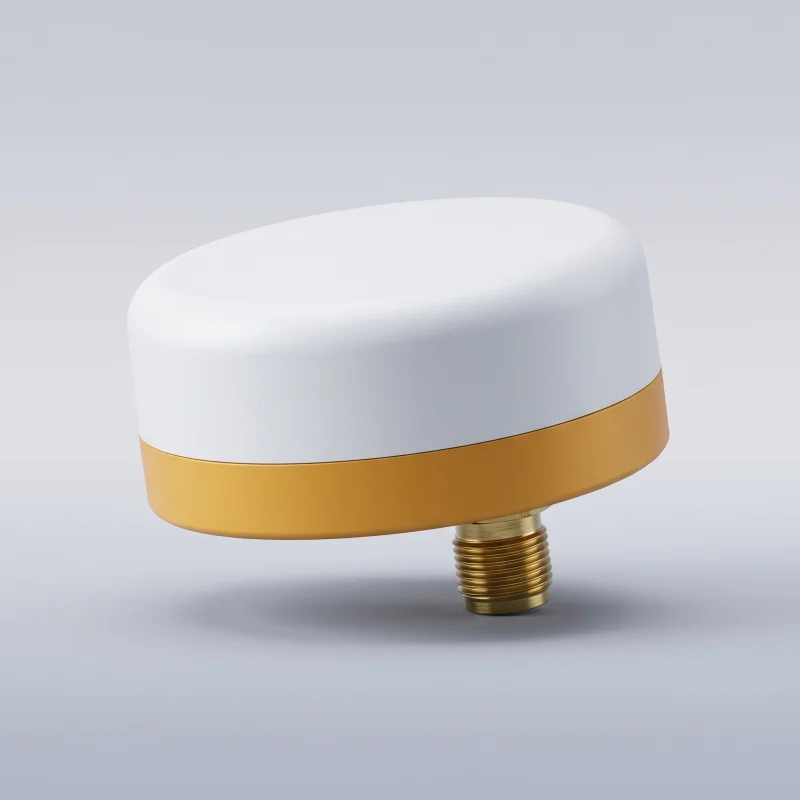
Aviation & UAV
Lightweight multi-frequency antennas for manned aircraft, unmanned systems, and missile-borne platforms.
View Category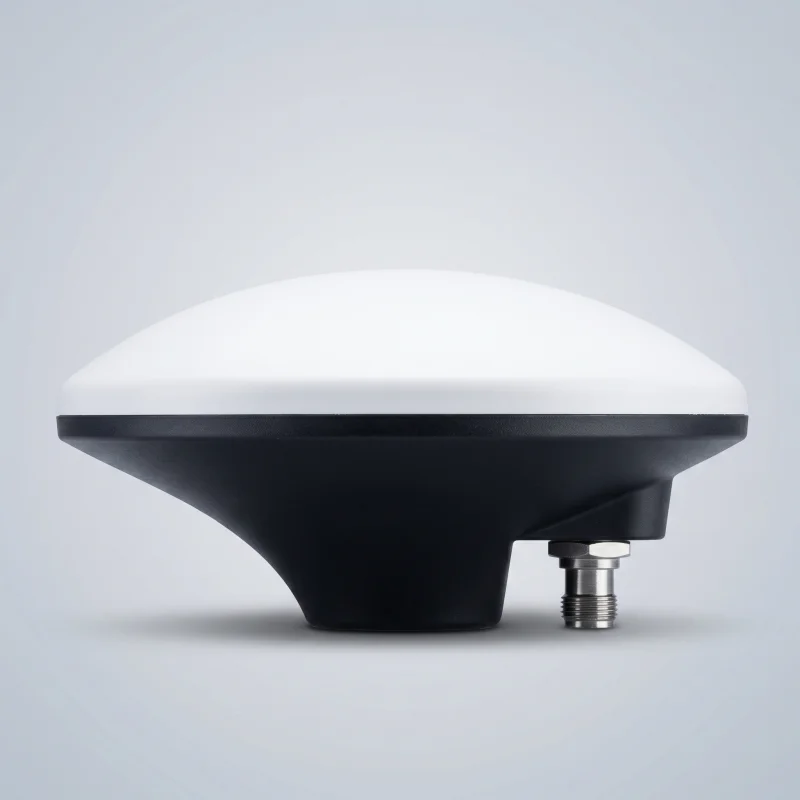
BDS Short Message Communication
Integrated Tx/Rx antennas for BDS RDSS short message — global coverage without cellular infrastructure.
View Category