
Defense & Critical PNT
Anti-Jamming CRPA Antennas
Controlled Reception Pattern Antennas (CRPA) engineered for contested electromagnetic environments. Array sizes from 4 to 32 elements deliver adaptive beamforming, anti-spoofing, and multi-directional null steering across BDS, GPS, GLONASS, and Galileo constellations.
Application Overview
Why CRPA Arrays Protect Mission-Critical PNT
GNSS signals arriving at receivers are weak — typically below the thermal noise floor — which makes them vulnerable to jamming, spoofing, and multipath interference. In contested environments, a standard GNSS antenna cannot distinguish legitimate satellite signals from hostile interference, leading to loss of positioning, navigation, and timing (PNT). CRPA arrays solve this by using multiple antenna elements in a precisely geometric pattern combined with adaptive digital beamforming to steer deep nulls toward interference sources while maintaining high gain toward satellites. High-end GNSource arrays achieve jamming-to-signal ratio (J/S) protection exceeding 100 dB against strong multi-directional interferers.
GNSource offers three complementary product lines. Integrated Positioning Antennas combine LNA, filtering, and baseline anti-jamming in a compact package for small UAVs and vehicular platforms with strict space and power budgets. Array Anti-Jamming Antennas (4–, 7–, 8–, and 11-element) deliver spatial filtering for shipborne, airborne, and industrial UAV systems operating under strong electromagnetic interference. System Antennas scale to 16- and 32-element configurations with AI-assisted anti-spoofing and burnout protection for large platforms requiring multiple simultaneous null zones and multi-band simultaneous reception.
Every array features symmetric element placement for consistent gain across channels, high port isolation (≥15 dB) to minimize crosstalk, excellent circular polarization (axial ratio ≤3 dB), and purpose-built connectors (MCX-J, SMA-K) for integration with customer RF front-ends. Environmental robustness is non-negotiable for defense-grade systems — GNSource CRPAs are designed to withstand salt spray, vibration, temperature extremes, and high-power electromagnetic environments, with integrated burnout protection on large-array models to prevent LNA damage from hostile transmitter pulses.
Key Specifications to Consider
J/S Ratio
The core anti-jamming metric. High-end arrays exceed 100 dB.
Element Count
More elements enable more simultaneous nulls and finer beam control.
Port Isolation
≥15 dB is baseline for usable adaptive processing.
Amplitude Consistency
±0.5 dB across elements is critical for accurate null steering.
Burnout Protection
Required for operation near high-power emitters.
Product Catalog
Anti-Jamming CRPA Models (4–11 Element)
5 models in this category. Click Request Quote on any row to pre-fill the inquiry form.
| Model | Type | Frequencies | Key Specs | Form Factor | Action | |
|---|---|---|---|---|---|---|
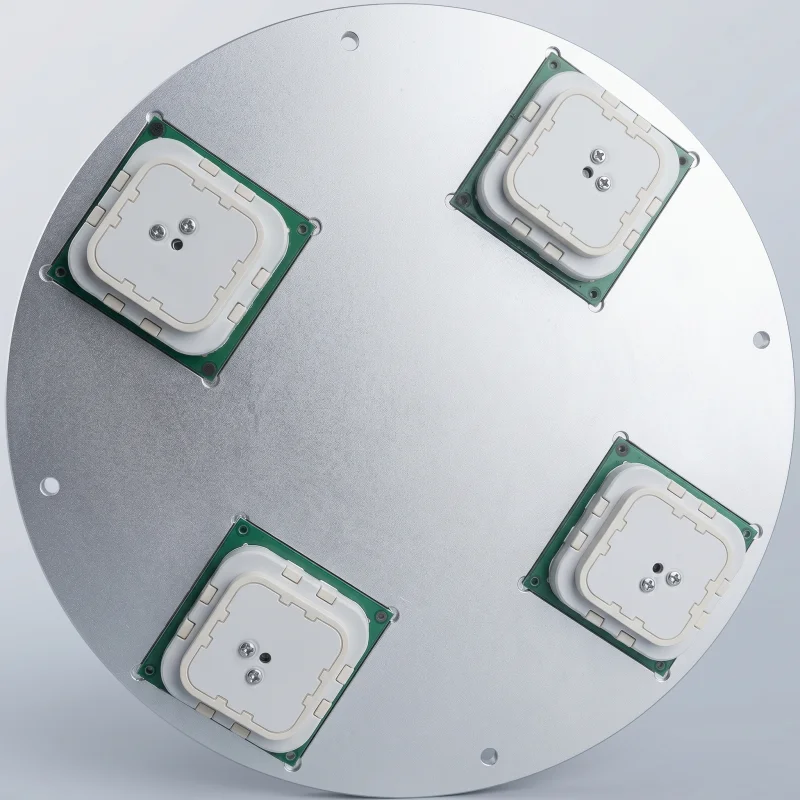 | TDXL-KGR4B1 | 4-Element Array | BDS B1 (1561 ±10 MHz) | Roll-off ≤-15dBi · Element isolation ≥15dB · Peak gain ≥5dBi array | Ø200mm × 9mm · 300g · SMA-K | |
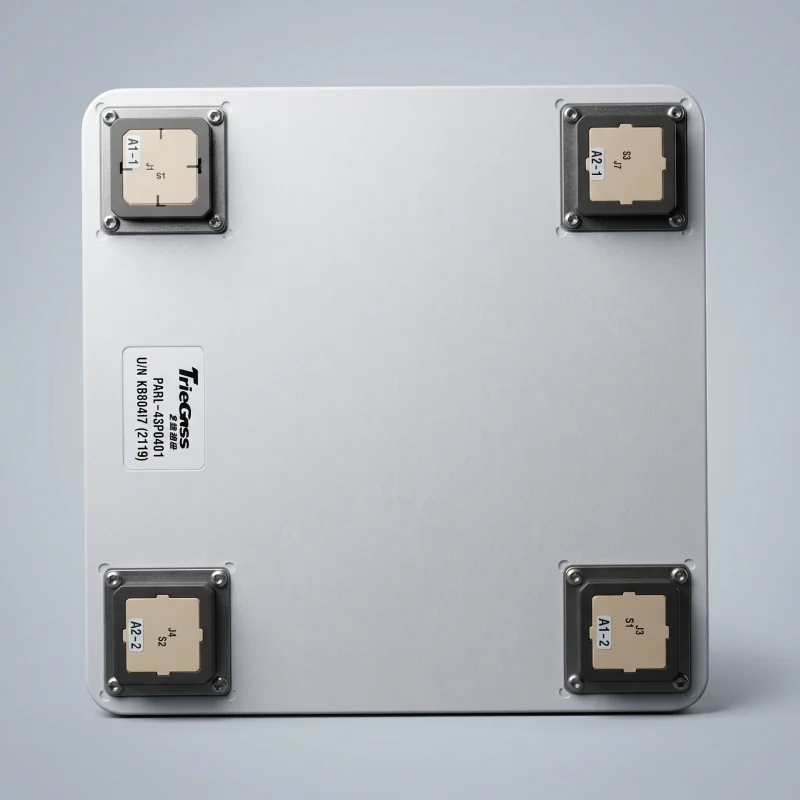 | TDXL-KGR0401 | 4-Element Array | BDS B3 (1268.52 ±10.23 MHz) | Symmetric 4-unit design · Gain ≥0.5dBi @ zenith · Axial ratio ≤3dB | 160×160×8mm · MCX-J | |
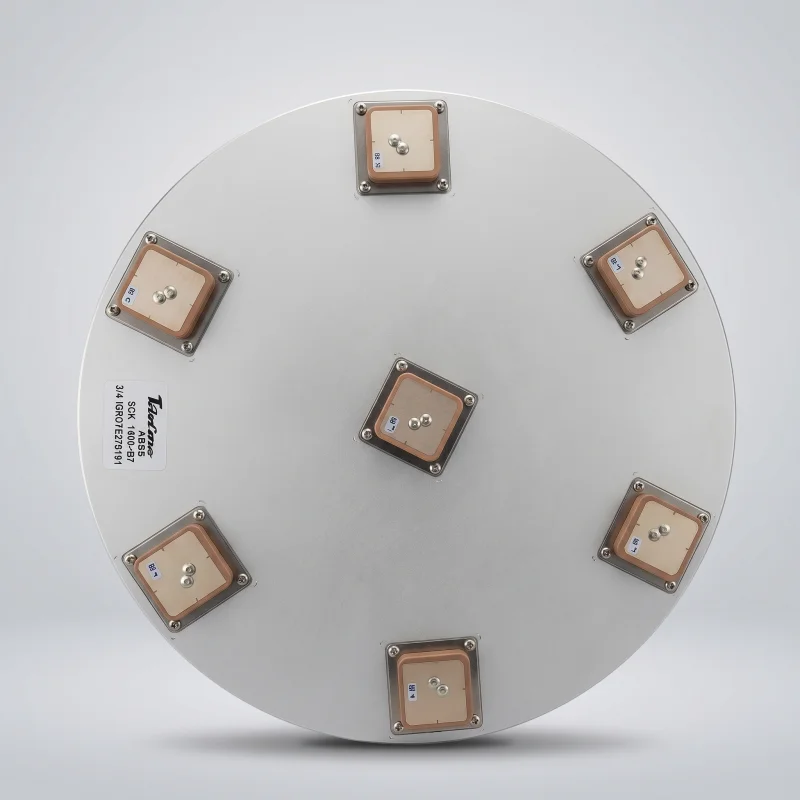 | TDXL-KGR0702 | 7-Element Array | BDS B1 (1561.098 ±2.046 MHz) | Wide beam · Port isolation ≥15dB · Element consistency ±0.5dB | Ø230mm × 10mm · MCX-J | |
| TDXL-KGR4L5&4L1 | 8-Element Dual-Freq | GPS L1 (1575.42) + L5 (1176.52) | Laminated 4+4 design · Axial ratio ≤3dB · ≥15dB isolation | Ø200mm × 14mm · MCX-J | ||
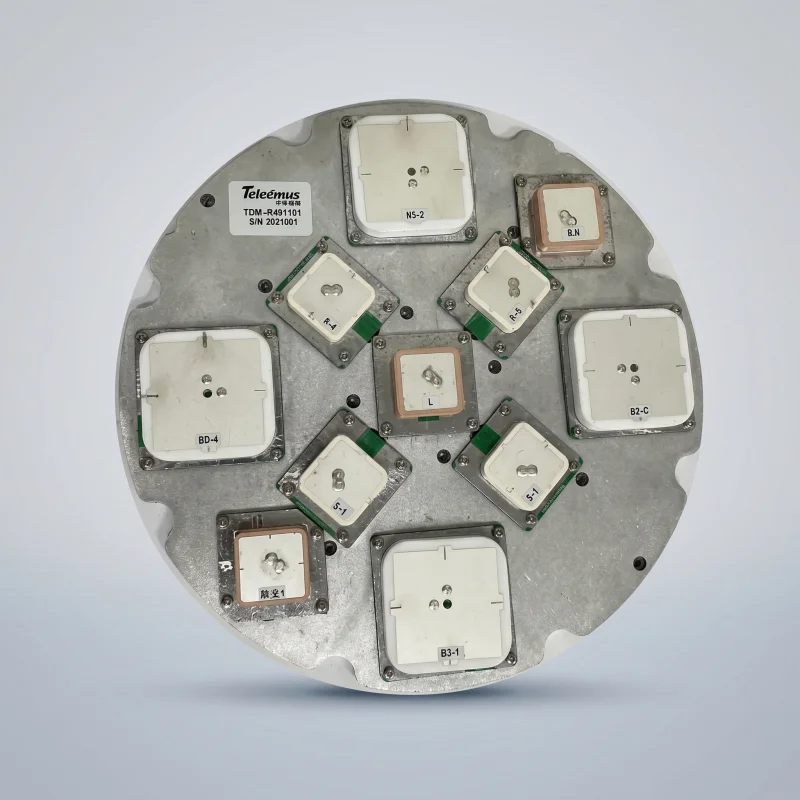 | TDXL-KGR1101 | 11-Element Multi-Band | BDS B3I/B1I/B1C + GPS L1 + GLONASS + BDS L/S | 4B3 & 4S anti-jamming · L-band Tx · Multi-band Rx | Ø230mm × 15mm · MCX-J |
TDXL-KGR4B1
4-Element Array
- Frequencies
- BDS B1 (1561 ±10 MHz)
- Key Specs
- Roll-off ≤-15dBi · Element isolation ≥15dB · Peak gain ≥5dBi array
- Form Factor
- Ø200mm × 9mm · 300g · SMA-K
TDXL-KGR0401
4-Element Array
- Frequencies
- BDS B3 (1268.52 ±10.23 MHz)
- Key Specs
- Symmetric 4-unit design · Gain ≥0.5dBi @ zenith · Axial ratio ≤3dB
- Form Factor
- 160×160×8mm · MCX-J
TDXL-KGR0702
7-Element Array
- Frequencies
- BDS B1 (1561.098 ±2.046 MHz)
- Key Specs
- Wide beam · Port isolation ≥15dB · Element consistency ±0.5dB
- Form Factor
- Ø230mm × 10mm · MCX-J
TDXL-KGR4L5&4L1
8-Element Dual-Freq
- Frequencies
- GPS L1 (1575.42) + L5 (1176.52)
- Key Specs
- Laminated 4+4 design · Axial ratio ≤3dB · ≥15dB isolation
- Form Factor
- Ø200mm × 14mm · MCX-J
TDXL-KGR1101
11-Element Multi-Band
- Frequencies
- BDS B3I/B1I/B1C + GPS L1 + GLONASS + BDS L/S
- Key Specs
- 4B3 & 4S anti-jamming · L-band Tx · Multi-band Rx
- Form Factor
- Ø230mm × 15mm · MCX-J
Flagship Multi-Band CRPA
TDXL-KGR1101 — 11-Element Anti-Jamming with Integrated Tx/Rx
The TDXL-KGR1101 combines 4-element B3 and 4-element S anti-jamming arrays with dedicated single-element reception channels for B1I/B1C/L1/GLONASS — all in a 15 mm-thick Ø230 mm low-profile package. This architecture enables simultaneous multi-directional null steering across two critical defense bands while maintaining clean positioning reception on civilian frequencies. Integrated L-band transmission supports BDS short message operations for platforms requiring bidirectional satellite communication. Designed for naval, airborne, and high-value vehicle platforms operating in contested environments.
- Operating bands
- BDS B3I · B1I/B1C · GLONASS · BDS L (Tx) · BDS S (Rx)
- VSWR (B3I)
- ≤2.0 across 1268.52 ±10.23 MHz
- VSWR (B1/L1)
- ≤2.0 across 1561.098 ±2.046 MHz
- VSWR (GLONASS)
- ≤2.0 across 1602 ±0.5625 MHz
- VSWR (L-band)
- ≤1.5 across 1615.68 ±4.08 MHz
- VSWR (S-band)
- ≤1.5 across 2491.75 ±4.08 MHz
- Polarization gain (B1/L1 RHCP)
- ≥-2.5 dBi @ 30° elevation · ≥3 dBi @ 90°
- Polarization gain (L LHCP)
- ≥-4.5 dBi @ 30° · ≥3 dBi @ 90°
- Polarization gain (S RHCP)
- ≥-2 dBi @ 30° · ≥4 dBi @ 90°
- Anti-jamming unit port isolation
- ≥15 dB
- Element amplitude consistency
- ±0.5 dB
- Axial ratio
- ≤3 dB
- Impedance
- 50 Ω
- Output connector
- MCX-J (customizable)
- Dimensions
- ≤ Ø230 mm × 15 mm (excl. connector height)
- IP rating / humidity
- 95% non-condensing
- Operating temperature
- -45°C to +65°C
- Storage temperature
- -55°C to +70°C
Large-Scale Array Systems
16 & 32-Element Anti-Jamming Arrays
Higher-element array systems for large platforms and mission-critical deployments. Configurations are tailored to platform mechanical constraints and threat profiles — contact our engineering team for specifications and integration details.
16-Element AI Anti-Spoofing Array
BDS · GPS · Galileo
- AI-powered signal authentication identifies and rejects spoofed GNSS transmissions
- Adaptive beamforming against multi-directional jamming sources
- High-power burnout protection for hostile RF environments
Platform: Industrial UAVs · USVs
32-Element Array — Model 1
BDS B1/B3 · GPS L1 · Galileo E1
- Real-time array signal processing with null formation on multiple interferers
- Spoofing signal detection via built-in identification algorithms
- High-power burnout protection for mission-critical platforms
Platform: Large-scale platforms
32-Element Array — Model 2
BDS · GPS · Galileo multi-band
- Active anti-spoofing with continuous signal authentication
- Multi-directional null steering for dense electromagnetic environments
- Optimized for high-dynamic unmanned autonomous platforms
Platform: Industrial UAVs · USVs · robotics
32-Element Array — Model 3
BDS · GPS · Galileo multi-band
- High-integration module combines RF, signal processing, and protection
- Full anti-jamming + anti-spoofing + burnout protection stack
- Compact form factor for embedded unmanned systems
Platform: Unmanned systems · embedded platforms
Get a Quote
Request a quote for Anti-Jamming CRPA antennas
Tell us about your project — we'll respond within 24 hours with pricing, lead time, and technical recommendations tailored to your application.
FAQ
Anti-Jamming CRPA FAQs
Common questions about J/S performance, element counts, anti-spoofing, and export control for contested-environment GNSS platforms.
What maximum J/S (jamming-to-signal) protection do GNSource arrays achieve?
High-end GNSource arrays deliver jamming-to-signal ratio protection exceeding 100 dB against strong multi-directional interferers, combining adaptive beamforming with multi-stage filtering. The exact figure depends on element count, array geometry, receiver integration, and the specific threat profile — contact our engineering team with your scenario for a recommended configuration.
Do your arrays support anti-spoofing, not just anti-jamming?
Yes. The 16-element array and all three 32-element array variants include built-in signal authentication algorithms that detect and reject spoofed GNSS transmissions. For civil platforms, the 11-element TDXL-KGR1101 offers 4-element B3 and 4-element S anti-jamming zones with dedicated multi-band passive reception channels for clean navigation signals.
How do I choose between 4, 7, 11, 16, and 32 elements?
Element count broadly maps to simultaneous null-steering capacity: 4 elements handle 1–2 jammers, 7–11 elements handle 3–5, 16-element arrays cover 6+ threats with AI anti-spoofing, and 32-element systems suit large-platform or mission-critical deployments requiring burnout protection and multi-band simultaneous reception. Platform size, weight, power, and mounting also constrain the choice — share your platform profile with us and we'll recommend configurations.
Are CRPA antennas subject to export control?
Yes. Controlled Reception Pattern Array antennas and defense-grade GNSS anti-jamming products fall under export-control regimes in multiple jurisdictions — including Chinese export control, and potentially U.S. EAR / ITAR and EU dual-use depending on product configuration, end use, and destination. Every inquiry passes export-control screening; we decline orders that cannot be lawfully fulfilled.
What connectors and interfaces do CRPA arrays use?
Standard output is MCX-J or SMA-K per element, supporting direct integration with commercial GNSS receivers and FPGA beamforming front-ends. Connectors, pinouts, and cable pigtails can be customized for specific receiver platforms and mechanical envelopes.
What element isolation and consistency is required for adaptive processing?
All GNSource CRPA arrays maintain ≥15 dB port isolation with ±0.5 dB amplitude consistency across elements — the baseline for usable adaptive null-steering and beamforming. The TDXL-KGR1101 extends this with a multi-band laminated design supporting simultaneous B3, B1/L1, GLONASS, L-band transmit, and S-band receive.
Related Solutions
You might also need
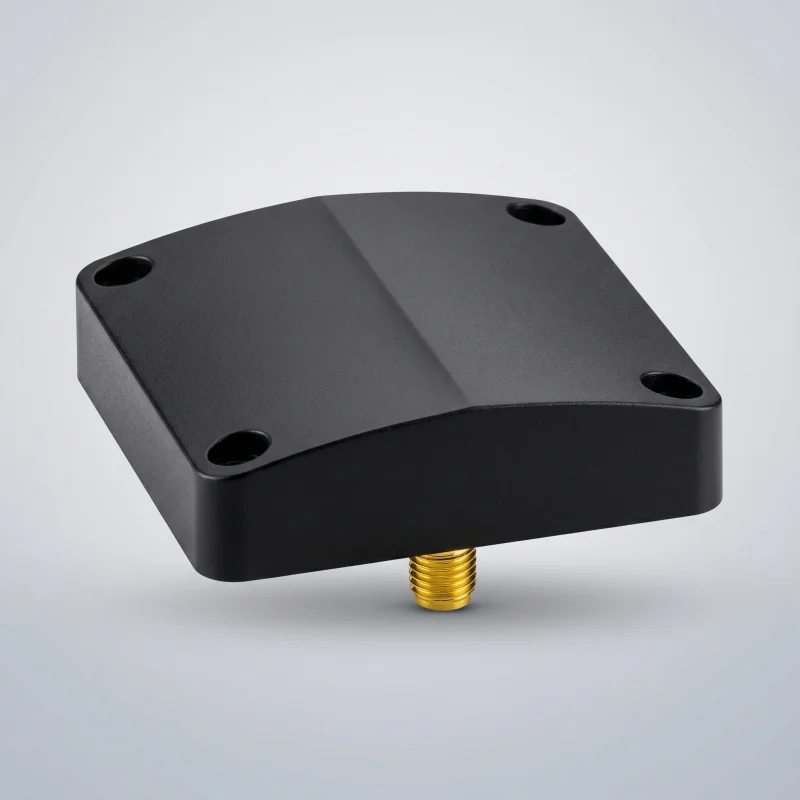
Defense & Military
Wideband antennas from VHF to W-band: phased arrays, horn antennas, radomes, and specialized RF components.
View Category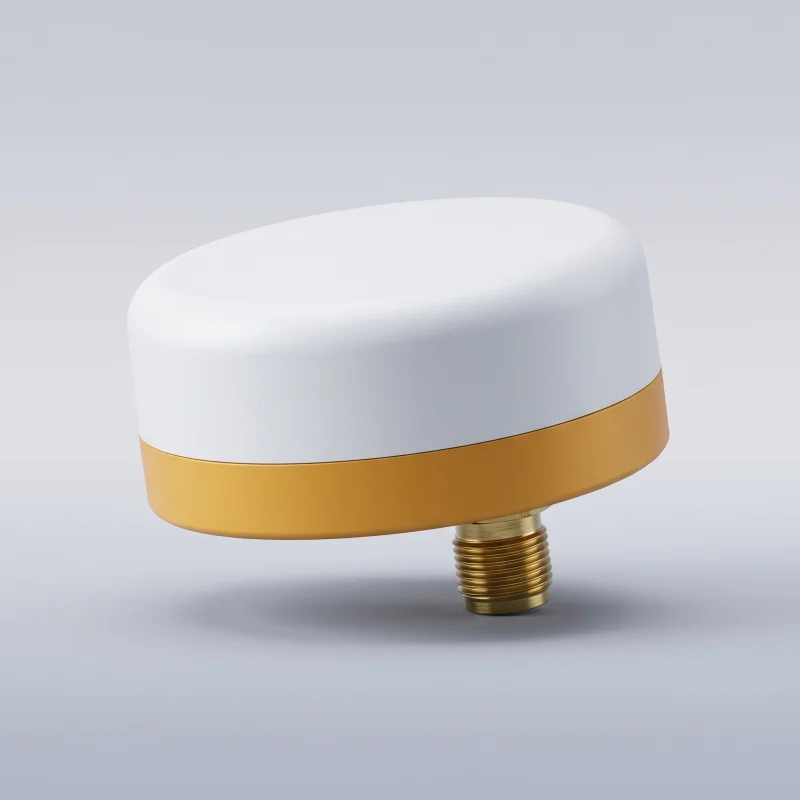
Aviation & UAV
Lightweight multi-frequency antennas for manned aircraft, unmanned systems, and missile-borne platforms.
View Category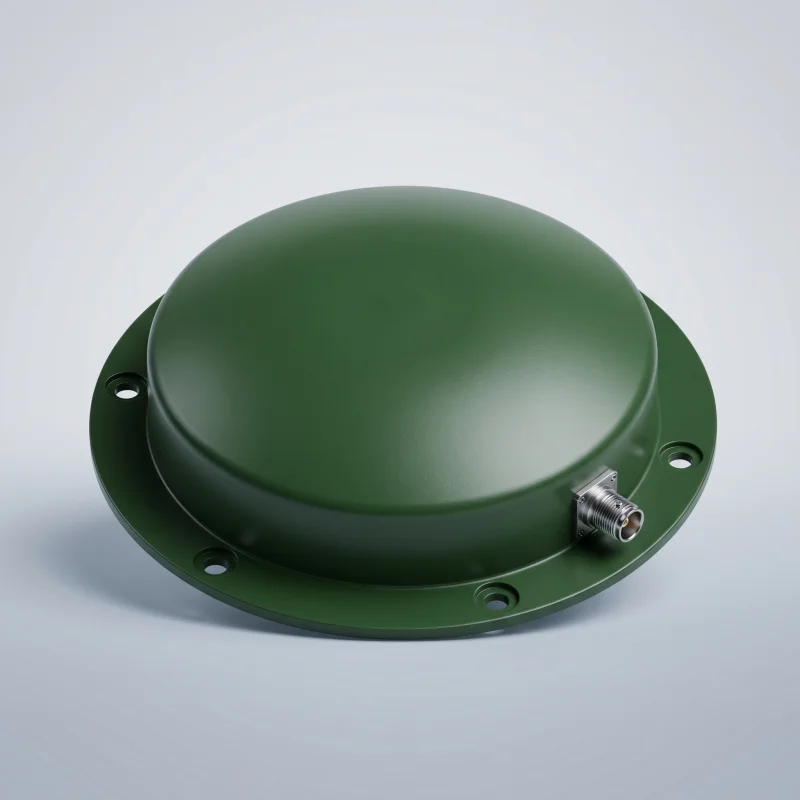
Vehicle-Mounted
Compact automotive antennas for ADAS, autonomous driving, fleet tracking, and BDS services.
View Category