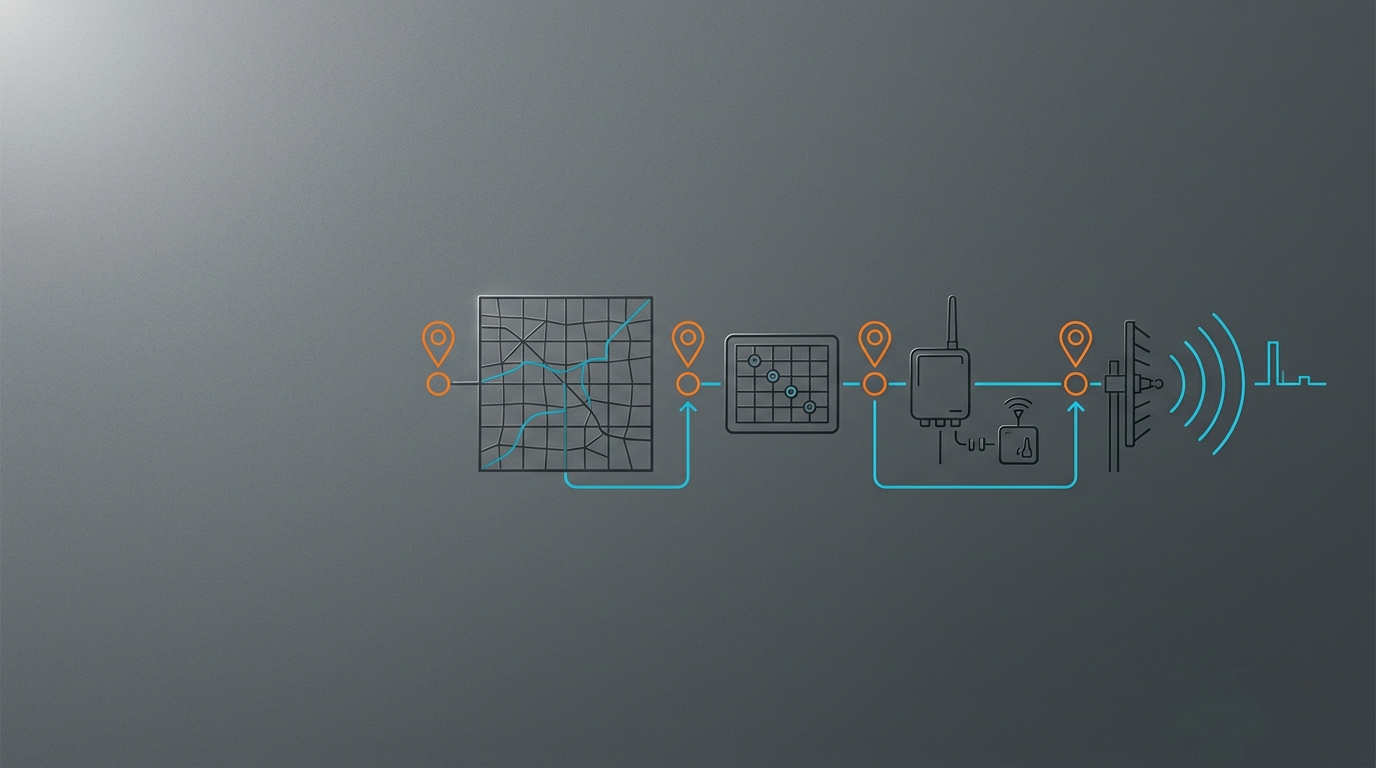
EU868 vs US915 is a deployment decision, not an antenna-label comparison. They are separate LoRaWAN regional-plan families, and the right one depends on the actual deployment, the selected network, and the configuration supported by the gateway and end device. Before you order hardware or load firmware, confirm four things: country, plan candidate, network/device configuration, and antenna evidence. That order prevents a common failure: a radio path that looks compatible on a datasheet but is not configured for the network it must join.
| Check | Question to close | Record to keep |
|---|---|---|
| Country | Where will each unit operate? | Deployment country and site list |
| Regional plan | Which current plan is the starting candidate? | Source and revision reviewed |
| Network and device | What plan and variant does the chosen network support? | Network, gateway and end-device settings |
| RF system | Does the installed antenna system cover the actual operating range? | Datasheet or test evidence, cable and mount details |
The wider IoT antenna buyer’s guide uses the same radio-first order across LoRa, cellular and Wi-Fi projects. For LoRaWAN, the detail matters because a country name alone does not configure a network.
1. Confirm the country and regional-plan candidate
Start with the deployment country—not a marketplace label such as “868/915 MHz.” The LoRa Alliance Regional Parameters RP002-1.0.5 reference describes LoRaWAN regional parameters for regulatory regions worldwide. It is the right technical reference for plan terminology; it is not a substitute for the requirements applicable to a particular product and installation.
For a quick first pass, use the LoRaWAN frequency by country lookup. It returns a sourced regional-plan candidate for its listed countries, including EU868, US915 and selected AS923-related cases. Treat that result as an engineering input to verify, not as a legal conclusion or a configuration command. If a location is not listed, do not fill the gap by guessing a nearby country’s plan.
EU868 and US915 have different RF coverage and regional-parameter details. That is enough to rule out substituting one label for the other. It is not enough to select an exact setup: the chosen network, end-device firmware and local deployment requirements still have to agree.
2. Confirm the network, gateway and end-device configuration
Once the candidate plan is known, ask the network provider which regional plan and any relevant variant its network uses. Then check the gateway documentation, network-server configuration and end-device firmware against that answer. These are separate controls; a gateway can have hardware suitable for a band while a device image or network profile is set differently.
Use one small handoff record for every deployment:
- Country and physical site where the radio will operate.
- The plan candidate and the LoRa Alliance document revision reviewed.
- The regional setting reported by the network provider or network-server owner.
- Gateway model and documented regional setting.
- End-device module, firmware region and configuration record.
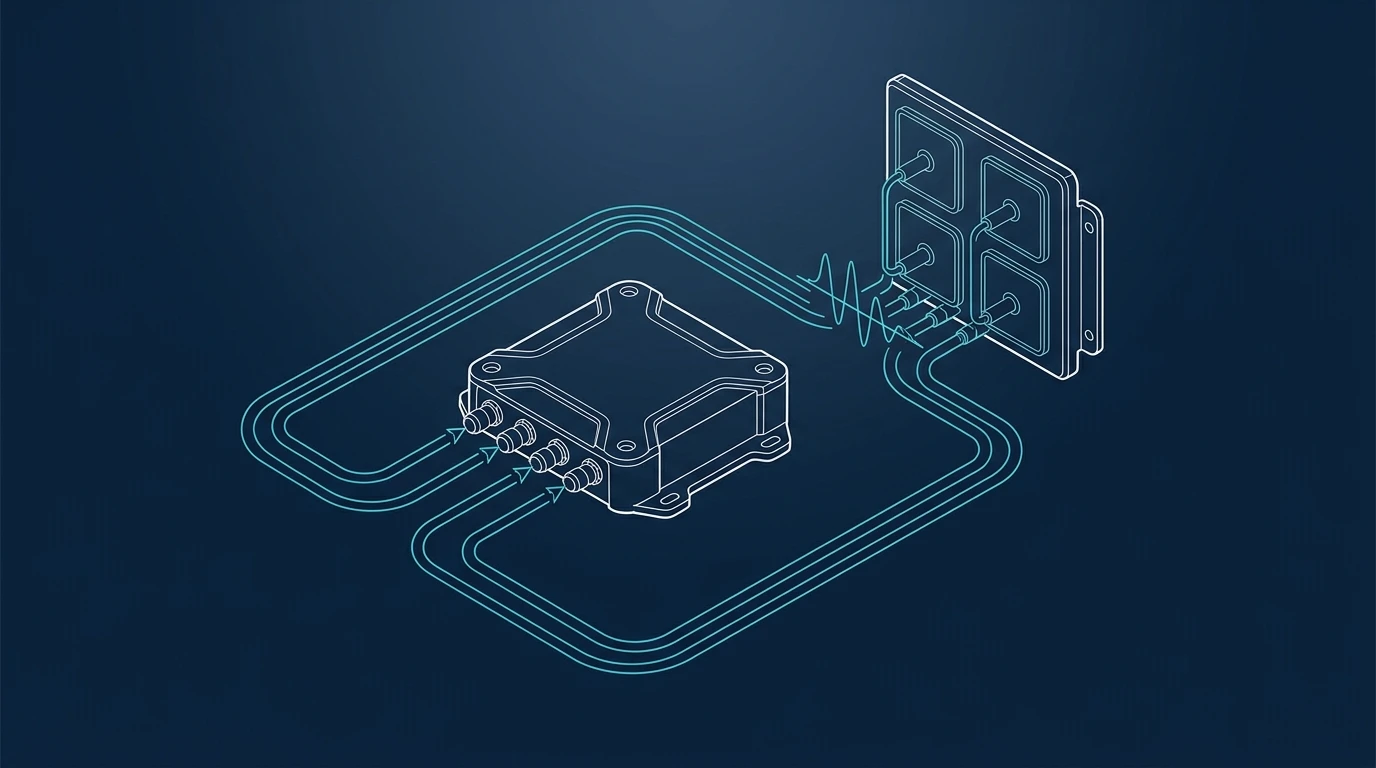
Do not infer the answer from a connector, an antenna’s centre-frequency label, or a product sold into another market. For an outdoor installation, the LoRaWAN gateway antenna setup guide adds the next site-level checks: identify the correct radio port, document the feeder path and validate the installed system.
3. Turn the confirmed plan into an antenna requirement
Only after the radio plan is closed should it become an antenna requirement. Ask whether the candidate antenna has measured performance across the frequencies the confirmed deployment uses, then examine its pattern, polarization, connector, cable loss, mounting surface and enclosure conditions. A broad “sub-GHz” or “868/915” description is a screening clue, not the evidence needed for a release.
This is the practical difference between a regional-plan check and antenna selection. The plan identifies the radio context; the antenna evidence shows whether the real RF path serves that context. A correct setting cannot compensate for a poorly matched or badly installed antenna, and a wideband antenna cannot make an incorrectly configured radio suitable for a network.
For the antenna-side decision, use the existing 868 MHz versus 915 MHz LoRaWAN antenna guide. It covers the data to request from an antenna supplier and why measured bandwidth matters more than a printed frequency label. Keep the two decisions in sequence rather than asking the antenna to answer a network-configuration question.
4. Record the four checks before release
The most useful output is not a one-off answer in a chat or a spreadsheet cell. It is a record that another engineer, installer or supplier can use without reinterpreting the project. Before release, capture the country, chosen network, regional plan/variant confirmation, gateway and end-device settings, antenna frequency evidence, connector/cable assembly, mounting conditions and unresolved questions.
That record makes the boundary clear. It supports engineering review; it does not certify a product or establish that an operating method is permitted. Confirm the current local requirements and the documentation for the actual equipment and network before commissioning.
When the country and network answers are ready, the IoT antenna compatibility checker can turn the RF inputs, cable, connector, installation environment and quantity into a downloadable English PDF or an inquiry for engineering review. Use it after—not instead of—the regional-plan checks.
Where AS923 needs an extra question
AS923 is a useful reminder that “Asia” is not a configuration. The Regional Parameters document describes multiple AS923 variants, so a broad regional name is not enough to select an end-device image or gateway setting. The deployment country may give you a candidate, but the network provider and the equipment documentation still need to identify the exact configuration used for the project.
The same caution applies to any multi-plan or unlisted location. A country lookup should be willing to say “no sourced candidate available” rather than silently return a plan that looks plausible. That is more useful than a longer table when the next action is to obtain the right deployment evidence.
Frequently asked questions
Can an EU868 device join a US915 LoRaWAN network?
Not as an assumed substitution. EU868 and US915 are different LoRaWAN regional-plan families. Confirm the regional capability and configuration documented for the specific gateway, end device and network before attempting deployment.
Is a dual-band 868/915 MHz antenna enough for both regions?
It may be a candidate, but it is not a complete answer. Verify the antenna’s measured performance over the frequencies used by the confirmed plan, then check the installation, cable, connector and radiation pattern. The regional plan and local deployment requirements remain separate checks.
Which LoRaWAN frequency plan applies in my country?
Use a sourced country lookup for a listed location as a starting candidate, then confirm the current plan and any variant with the network provider, device documentation and applicable local requirements. If the country is unlisted or supports multiple possibilities, do not assume a default.
What should an OEM RFQ include for a LoRaWAN antenna?
Include the deployment country, confirmed network and regional setting, gateway or end-device role, required operating range, electrical performance evidence, connector and cable assembly, enclosure or ground plane, mounting method, environment and prototype/production quantity. This lets an antenna supplier evaluate an RF system rather than a vague “LoRa antenna” request.
Make the country lookup the first check, not the final answer
Start with the LoRaWAN country lookup, close the four checks with the parties responsible for the network and equipment, then create an RF brief for antenna review. That sequence keeps EU868, US915 and AS923 labels in their proper place: useful engineering inputs, never shortcuts around a real deployment decision.