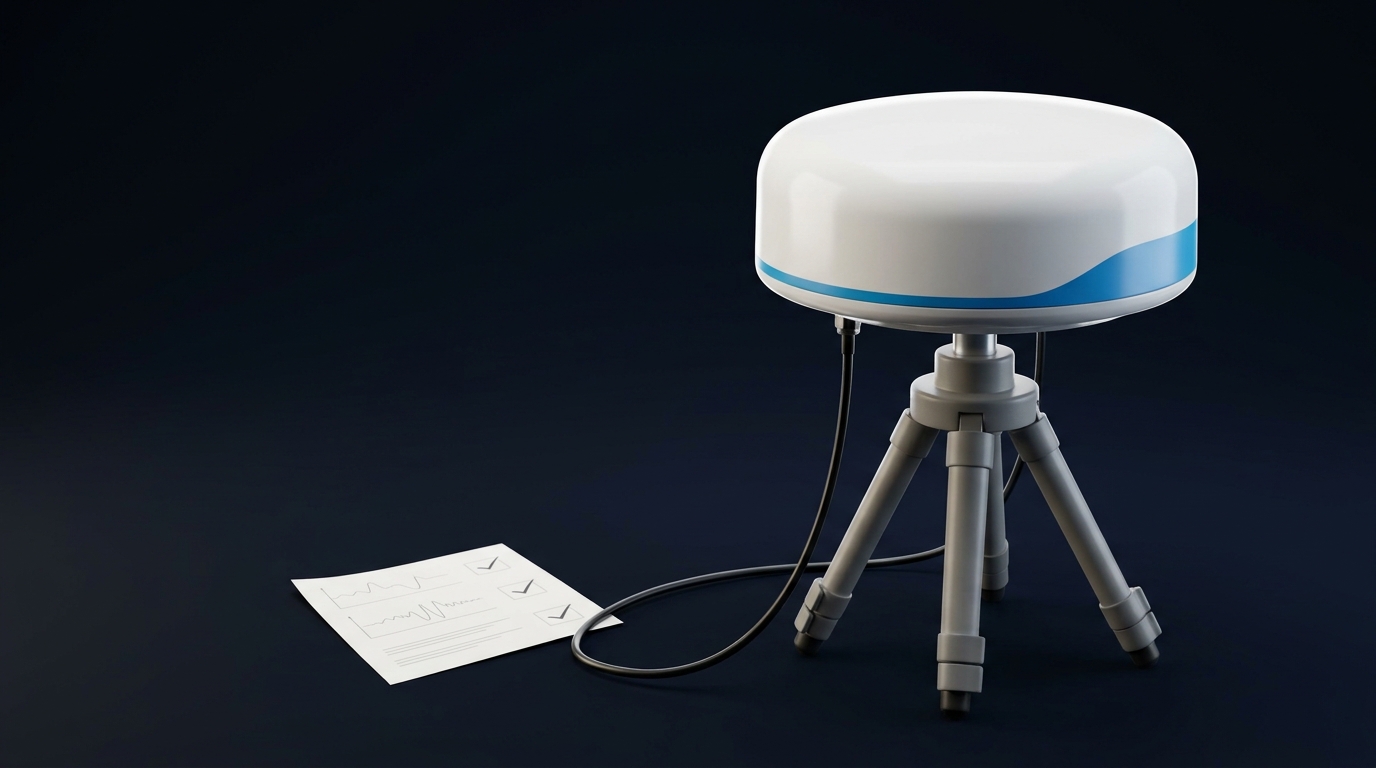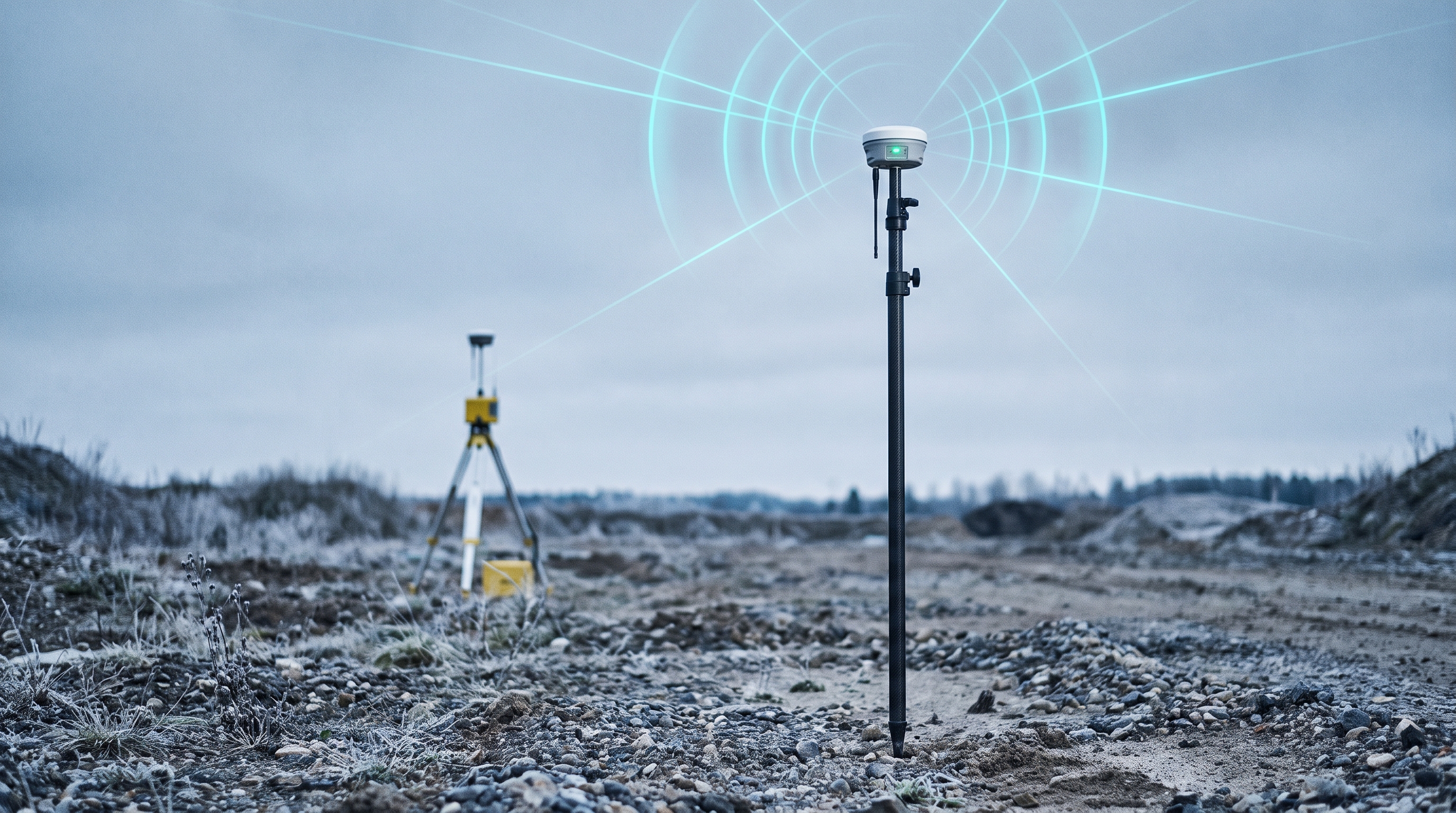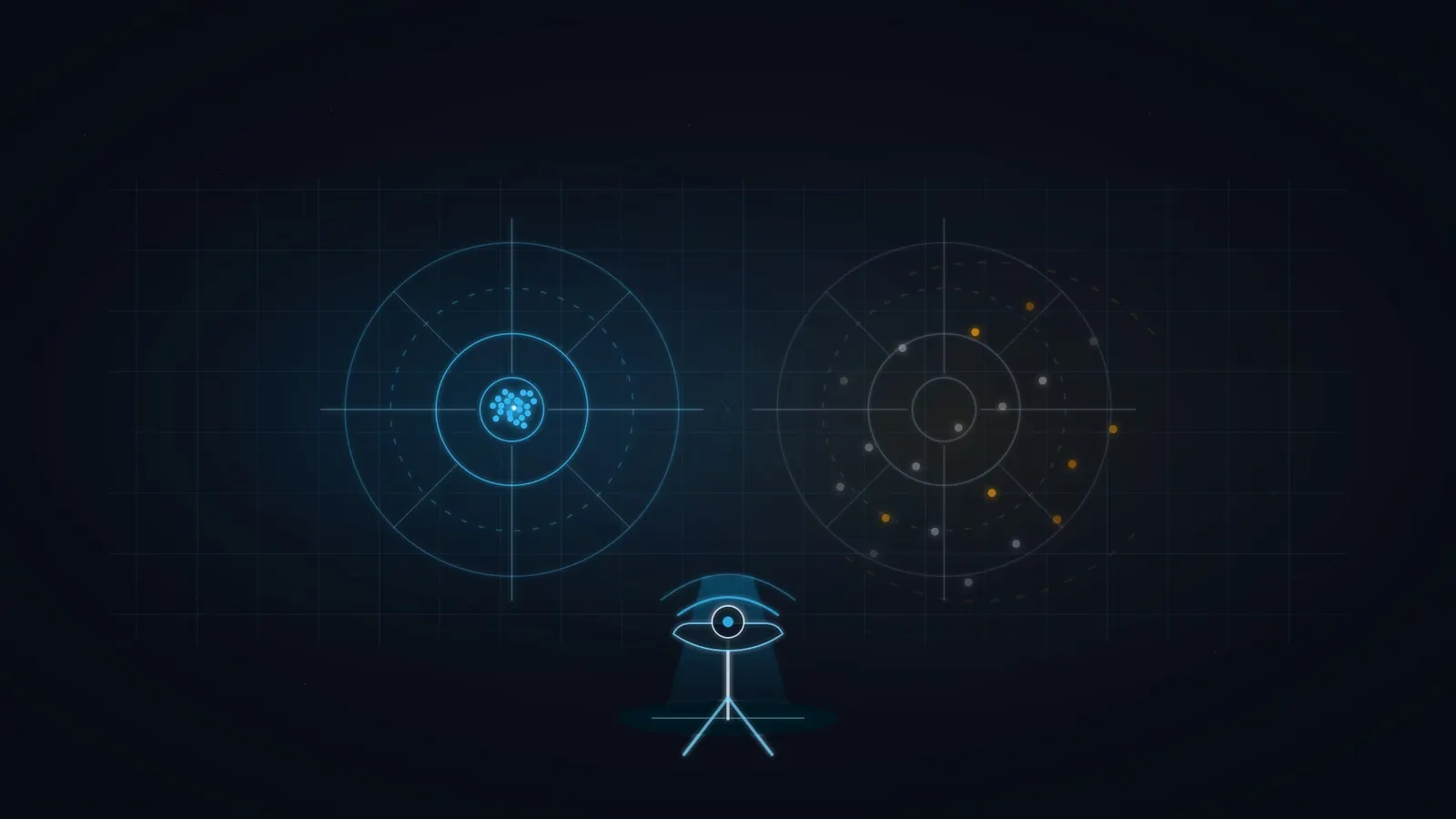
Under open sky the accuracy gap between a survey-grade and a low-cost GNSS antenna is real but modest. The moment you add buildings, canopy, or reflective surfaces, it becomes decisive. In one controlled urban study, simply swapping the antenna on a low-cost receiver — from a low-cost model to a geodetic one, with no change to the receiver — lifted the RTK fix rate from 75% to 93%, an 18-point gain; under open sky the same swap changed almost nothing (about 1.5 points) (Sensors, 2023). The practical lesson is that on a budget setup the antenna is the single highest-ROI upgrade you can make, and its payoff lands almost entirely where you work in multipath. It’s where your first upgrade dollar should go — above the cable, not below it.
Below are the real numbers, what actually drives the difference, and the cases where a low-cost GNSS antenna is genuinely good enough.
The accuracy gap, in numbers
The honest answer to “how much do I lose?” depends entirely on the environment. The table below shows typical reported ranges across studies — a small separation in open sky that widens sharply once multipath enters.
| Condition | Low-cost antenna | Survey-grade antenna |
|---|---|---|
| Open sky, RTK fixed, horizontal | ~8–15 mm | ~5–8 mm |
| Open sky, RTK fixed, vertical | ~20–40 mm | ~10–15 mm |
| Urban / canopy / reflective | degrades sharply, frequent loss of fix | holds far better |
| Long-term phase-center repeatability | 2–5 mm drift (if uncalibrated) | <1 mm (calibrated) |
The cleanest controlled evidence comes from a 2023 urban-surveying study in Sensors. It ran the same low-cost dual-frequency receiver (a u-blox ZED-F9P board) with two antennas in turn: a low-cost antenna and a geodetic one. Changing only the antenna lifted the urban RTK ambiguity-fix rate from 75% to 93% — an 18-point gain — while open-sky fix rates barely moved. Against a full professional system (a Leica receiver and antenna), the low-cost instruments still showed roughly 2× higher multipath error in open sky and up to 4× in urban areas. So a better antenna closes much of the gap on a budget setup — but does not erase the full professional system’s lead in the hardest environments.
The takeaway isn’t “low-cost is bad.” It’s that the antenna sets the ceiling: the receiver can only work with the signal the antenna hands it, and a better antenna raises that ceiling more cheaply than any other single change.
Why the antenna is the bigger lever
This surprises people who spent their budget on the receiver. The logic is simple once you trace the signal path: every error the antenna lets in, the receiver inherits and cannot fully remove. Four mechanisms do the damage.
Phase center stability. The phase center is the point your coordinates are actually measured from, and it moves with signal angle and frequency. A low-cost patch shows 2–5 mm of phase-center variation; a calibrated survey antenna holds under 1 mm. For navigation that’s invisible — for a 2 cm RTK fix it’s a measurable slice of your error budget. We cover the mechanism in depth in how phase center variation impacts RTK accuracy.
Multipath rejection. Reflected signals off buildings, ground, and water are the single biggest error source in real environments. A survey antenna is built to reject them — through ground-plane geometry and clean circular polarization — where a bare patch lets them through. This is exactly why the gap explodes the moment you leave open sky. See multipath mitigation for reference stations for the full picture.
Multi-band coverage. Survey antennas cleanly receive L1/L2/L5 across all constellations, which lets the receiver resolve ambiguities faster and correct ionospheric error. Many low-cost antennas are single- or weak dual-band, starving the receiver of exactly the signals it needs for a fast, stable fix.
Calibration. Survey-grade models are calibrated (IGS/NGS), so processing software can apply a known phase-center correction. An uncalibrated antenna can’t — the error stays in your solution. This is why upgrading the antenna lifts a budget setup more than upgrading the receiver does: the antenna fixes errors the receiver has no way to recover.
When a low-cost antenna is genuinely fine
Honesty matters more than upselling here. There are real cases where a low-cost antenna is the right call:
- Open-sky, non-critical work. Asset mapping, GIS data collection, agriculture passes where decimeter-to-low-centimeter is acceptable and the sky is clear.
- Prototyping and development. Bench testing a receiver or building a proof of concept before committing to production hardware.
- High-volume embedded products where a flat patch and low BOM cost decide the design, and the accuracy target is navigation-grade, not survey-grade.
If that’s your situation, a low-cost antenna saves money you don’t need to spend. The error is paying for a survey antenna you can’t use — or, far more common, not paying for one when your environment demands it.
When you cannot cut the antenna
Conversely, these applications punish a cheap antenna immediately:
- CORS and reference stations — every downstream rover inherits the base’s error. A bare patch here corrupts an entire network.
- Urban, canyon, or canopy surveying — the environment where multipath rejection earns its cost many times over.
- Deformation and structural monitoring — sub-millimeter stability over years is the entire point; only a calibrated survey antenna delivers it.
- Any work where a re-survey costs more than the antenna — which, for professional surveying, is almost always.
How to decide for your setup
Work backward from environment and tolerance, not from the receiver you already own:
- What’s your accuracy target? Decimeter or worse → low-cost is fine. Centimeter or better → survey-grade.
- What’s the sky like? Consistently open → the gap is modest. Urban/canopy/reflective → survey-grade is non-negotiable.
- Does anyone depend on this position? Base station, control point, monitoring → never cut the antenna.
If you already own a capable receiver and your fixes are noisy, the highest-ROI upgrade is almost always the antenna, not a new receiver. To match a specific antenna class to your platform, bands, and accuracy target, the GNSource antenna selector walks the same logic. For the deeper selection framework — form factor, gain, and the specs to demand — see our guide to choosing a high-precision GNSS antenna, and for the form-factor question specifically, choke ring vs patch vs helical.
Frequently asked questions
How much more accurate is a survey-grade GNSS antenna? Under open sky the difference is modest — a few millimeters. It grows where multipath is present: in the Sensors study, changing only the antenna on a low-cost receiver raised the urban RTK fix rate by 18 points (75% → 93%), because a better antenna rejects reflected signals a cheaper one lets through. Open-sky fix rates barely changed — the antenna’s payoff is concentrated in hard environments.
Can a low-cost receiver with a good antenna match professional equipment? It gets close. Fitting a geodetic antenna to a low-cost receiver pushed its urban fix rate to 93% in the Sensors study — but a full professional system (Leica receiver and antenna) still showed roughly 2–4× lower multipath error. The antenna closes most of the gap; the rest comes from the receiver and the complete system. For consistently open-sky work, the practical difference is small.
Is a patch antenna ever good enough for RTK? Yes — in consistently open sky, for non-critical centimeter-to-decimeter work, a quality multi-band patch can hold an RTK fix. It fails in urban, canopy, and reflective environments, and it should never anchor a base station or monitoring install.
What makes a survey-grade antenna worth the price? Four things you can’t add later: a stable, calibrated phase center; strong multipath rejection; clean multi-band L1/L2/L5 coverage; and an IGS/NGS calibration your processing software can apply. Together they set the accuracy and reliability ceiling for everything downstream.
Written by GNSource Engineering. GNSource manufactures survey-grade GNSS antennas for RTK, CORS, and monitoring networks. Talk to our engineers about matching an antenna to your accuracy target and environment.